AI Content Skills: The Claude SEO Skill for SEO and GEO
Part 4 of the AI content skills series: five SEO and GEO mistakes our AI made, the note that fixed each, and a Claude SEO skill that does the keyword work before the writing.


AI content skills fall apart on search and AI answer engines for five reasons: the title is clever instead of searched, nobody pulled the keyword data, the comparison reads "competitor vs us", the alternatives list only pitches you, and a crawler cannot tell what your business actually is.
Below are five review notes we gave our own AI, each with the line it wrote, the correction, and a Claude SEO skill that runs the checks before a word gets written. For what GEO actually is, read what GEO means; this piece only covers what goes wrong.
What this series is
We run every piece of content through an AI agent and review each draft before it goes out. This AI content skills series collects the corrections that keep repeating, one article per mistake, each ending with a Claude skill you can install. For the full list we run our agents on, read 166 ready-made skills that turn any AI into a specialist.
The 5 mistakes
1. Title is clever, not searched
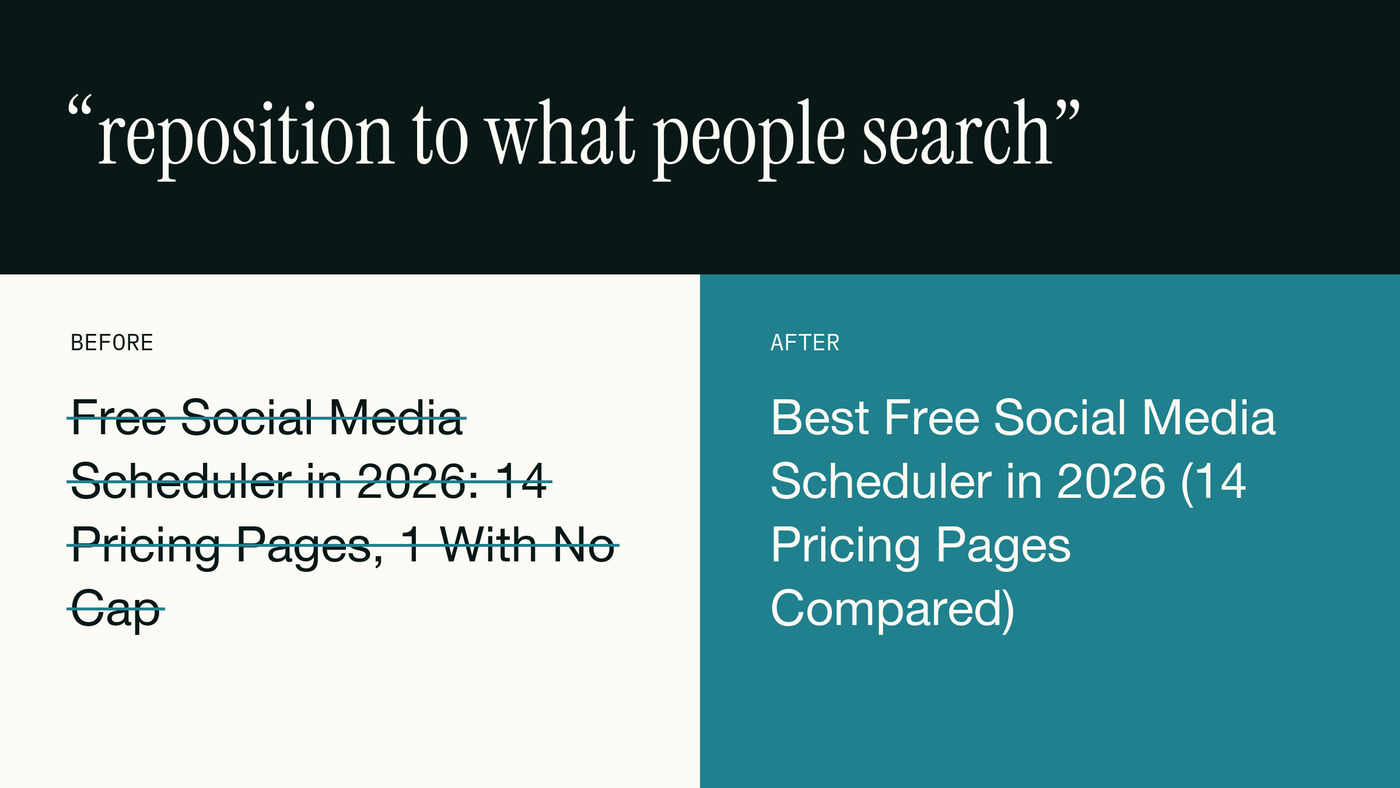
A title is the phrase a person types into Google, not a clever line. Rank the candidate phrase for search volume before you fall for the wording, the way we did for Best Free Social Media Scheduler in 2026.
2. Asking the owner for the keyword
The agent does the keyword research: volume, intent, the current top results, then proposes titles with the numbers attached. That is how AI Workflows: 5 Examples One Person Can Run in 2026 got its title, not a guess.
3. Competitor vs us
Compare two names people already search, then bring yourself in as the third option in the middle. That produced Postiz vs Buffer and HubSpot vs Buffer, not a "Postiz vs Voholabs" page nobody was searching for.
4. Alternatives list that only pitches you
Honest lists get cited by AI answer engines. List the real alternatives, state plainly where you are the most generous, and say who should stay with the incumbent, the way our Hootsuite free alternative post does.
5. The crawler test
A stranger, or an AI crawler, has to reach the right understanding from the page alone, with nobody there to explain it. Copy, pricing and structured data have to agree, or the crawler files you under the wrong category.
The Claude SEO skill
Install seo-geo-check and it runs these five checks before you propose a title, a comparison or a page of copy. It sits in your Claude skills folder next to any others you run, and it triggers on the words SEO, GEO, title, keyword, comparison and alternative.
mkdir -p ~/.claude/skills/seo-geo-check
# paste the SKILL.md below into ~/.claude/skills/seo-geo-check/SKILL.md
# then in Claude Code: /seo-geo-check  (or just ask it to draft; the description triggers it)
---
name: seo-geo-check
description: Use before proposing a blog title, outline or comparison post, and before publishing site copy. Pulls the searched phrase, shapes comparisons and alternatives honestly, and runs the crawler test. Triggers on SEO, GEO, AEO, blog title, keyword, comparison, alternative, vs, landing page.
---
# seo-geo-check
Do the research first, then propose. Never ask the owner which keyword to use.
## Rules
1. Title = the phrase people type. Pull search volume and the current top results for the candidate phrase (DataForSEO, GSC or Ads planner). Lead the title with the searched phrase; put the number or angle after a colon.
2. Bring data, not questions. Propose 3 titles with volume and intent next to each. "Best ai workflows 2026" is the shape; "Titles nobody searches" is the failure.
3. Two known names, then you. Comparisons are "A vs B" where both are searched, with your product introduced in the middle as a third option. Never "competitor vs us".
4. Honest alternatives. List the real alternatives with their limits, state plainly where you are most generous and who should stay with the incumbent. Declare an interest when one option is yours.
5. Crawler test. Read the finished page as a stranger and as an AI crawler: would they reach the same understanding of what the business is and sells? Copy, pricing, FAQs and structured data must agree.
## Self-check
- Does the title start with a phrase that has measured volume? Is the volume written next to it?
- For GEO: does the first paragraph answer the query in two sentences? Are there 3 to 4 FAQs written as standalone answers? Are there 5 quotable key takeaways?
- For comparisons: are both names searched? Is ours the third, not the first?
- Would an answer engine cite this list to a stranger without embarrassment?
- Read only the page: what is the business? Does that match reality?
Run it on the last thing you published.
Where this leaves you
Install the skill, then run it on the next title before you fall for a clever line. It will not write the article for you. It only stops you publishing a page nobody was searching for. Voholabs Studio is the free scheduler we built to publish the result once you are happy with it.
Frequently asked questions
- What does the Claude SEO skill in the AI content skills series do?It pulls search volume and intent for a candidate title before anyone writes a word, checks the title against the phrase people actually search, forces comparisons into the 'two competitors, then you' shape, and runs a crawler test on the finished page to check copy, pricing and structured data agree.
- Does GEO need different content from SEO?No, it is the same page. GEO adds quotable one line answers, standalone FAQs and honest comparisons that an AI answer engine can lift straight out of the text, on top of the same title, structure and crawler-readable copy that SEO already needs.
- Should I write competitor vs my product articles?No. Compare two competitor names people already search, for example Postiz vs Buffer, and bring your own product in as the third option in the middle. A competitor vs us article has no search demand of its own and reads as a pitch, not a comparison.
Sources
- Skills (Claude Code Docs)· Anthropic
- Creating helpful, reliable, people-first content· Google Search Central