Blog vs Social Media: 52 Minutes vs 2 Years (And Where to Start)
Blog vs social media: an X post is half spent in 52 minutes, a blog post in 2.03 years. Here is where to put your first 90 days of content effort.

Half of everything an X post will ever earn arrives within 52 minutes of publishing. For a blog post, that halfway mark lands 2.03 years out. Both figures come from the same January 2026 study of 5.6 million posts, and between them they settle a question every operator hits when time is short: blog vs social media, which one gets your first 90 days? Start with the blog, then use social to point at it. If you are already drafting posts with an AI assistant and firing them into LinkedIn and X because the audience is sitting there, you are putting your scarcest hours into the shortest-lived thing you can make.
What is content half-life, and why does it decide your first move?
Content half-life is the time it takes a piece of content to earn half of the total engagement it will ever earn, which is another way of asking how long the hour you spent keeps paying you back. Scott Graffius measured it across 5.6 million posts published through 2025 and released the update on 23 January 2026.
Half-life of one piece, by where you publish it:
- X: 52 minutes
- Instagram: 18.3 hours
- LinkedIn: 23.2 hours
- YouTube: 10.6 days
- Your own blog: 2.03 years
The gap between the top of that list and the bottom is roughly twenty thousand to one. An hour spent on a post to X buys about an hour of attention. The same hour spent on a page on your own domain buys a decay curve still running when the next financial year starts.
Why does social-first burn your first 90 days?
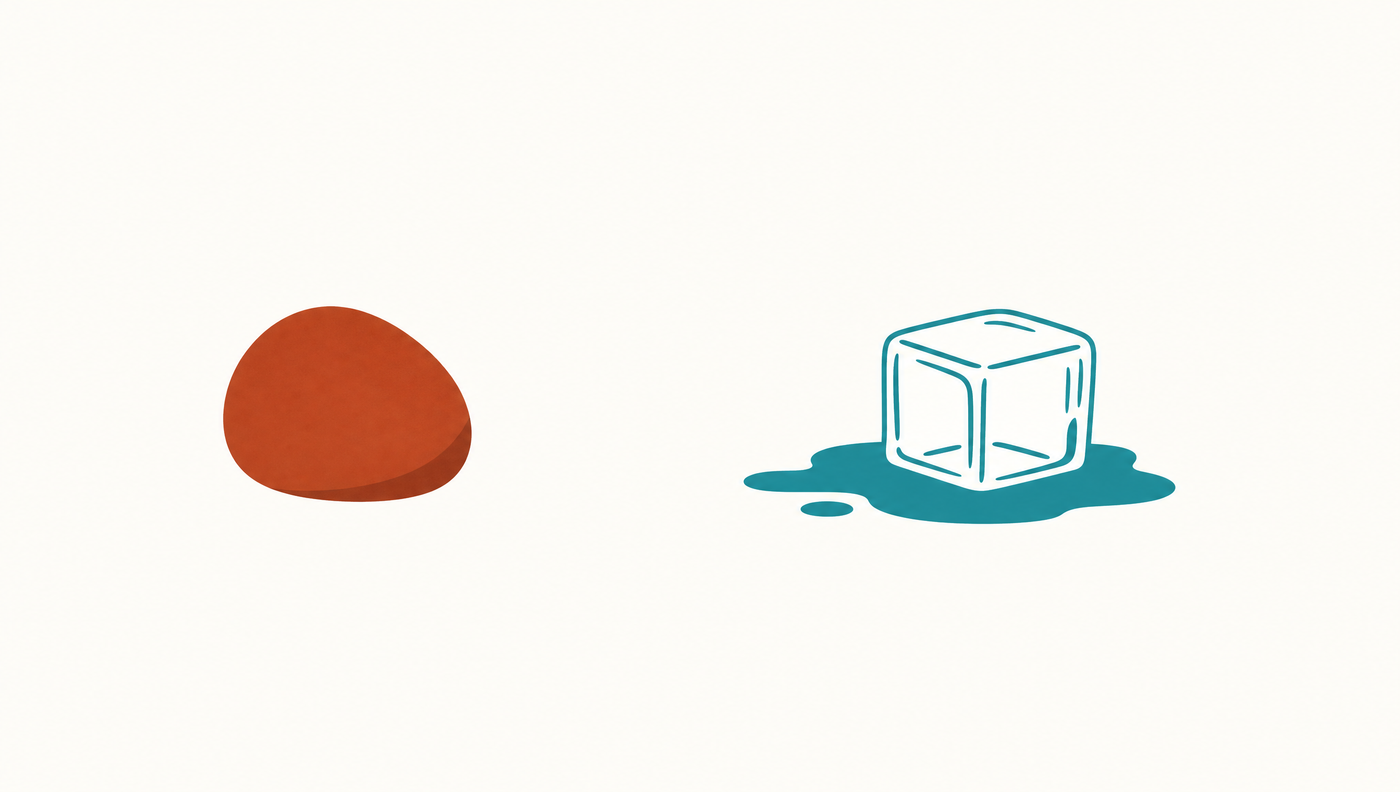
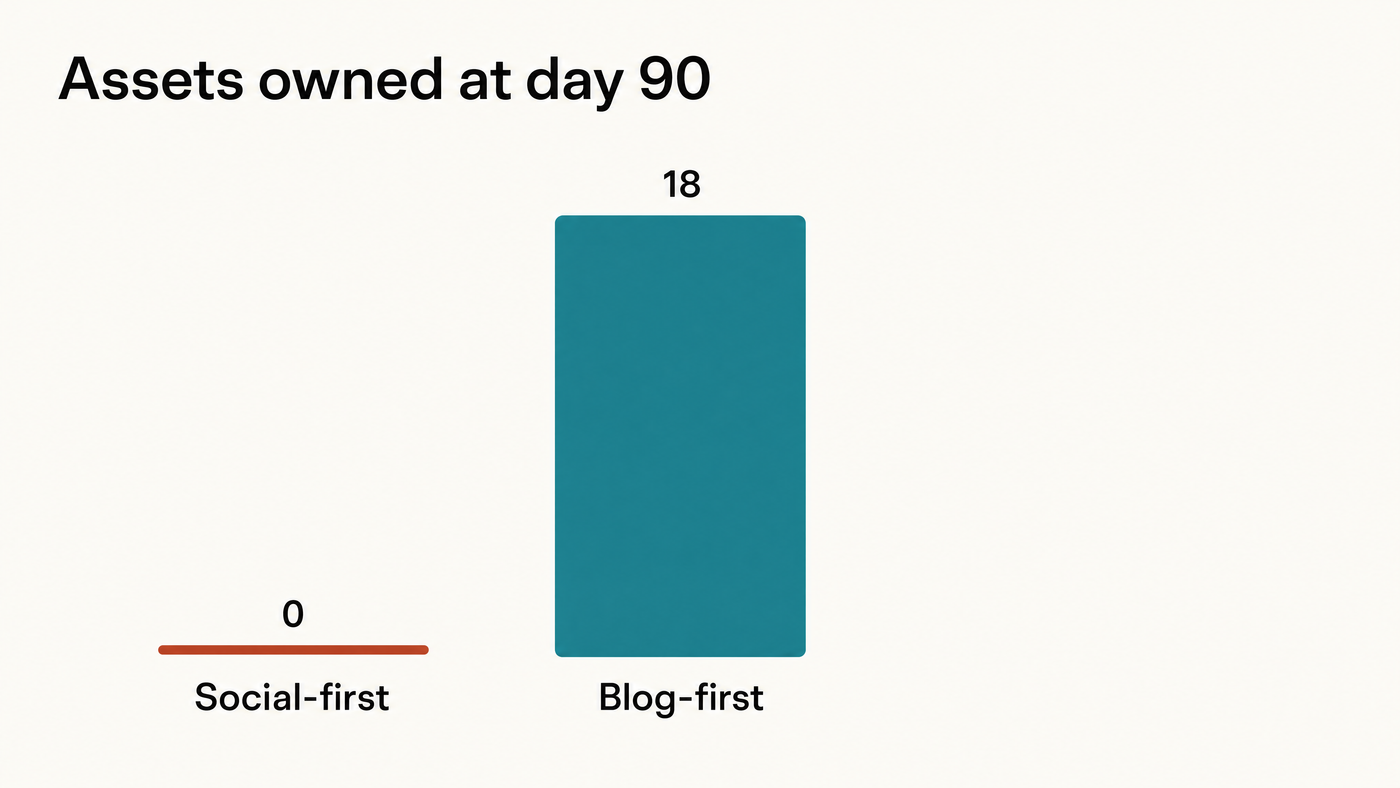
Social-first spends a quarter of effort on stock that expires before the quarter does. Run the arithmetic on one hour a day for 90 days. Posting daily gets you roughly 90 posts, and by day 90 the first 89 have finished earning. What you own at the end is whatever you published this morning, which is what you owned on day 3.
The reach floor makes it worse. Brands on X now see a median engagement rate of 0.015%, and average impressions per post slipped from 2,864.78 in 2024 to 2,711.29 in 2025. Instagram reach fell 12% year on year, with typical posts landing in front of roughly 3 to 4% of followers. You are renting a smaller room each quarter and paying the same rent in hours. The ownership case underneath this sits in our piece on where AI content should physically live; this one answers the sequencing question that comes before it, and the economics will look familiar if you have ever weighed an owned asset against a rented click from paid ads.
Please note: keep your social accounts running. The argument is about what you build first, because a feed cannot hold an asset for you.
Why does blog-first compound instead?
Blog-first converts the same 90 days into a stock of pages that keep working after you stop typing. At five hours a post, one hour a day gives you 18 published pages in a quarter, each one a URL a buyer can open, a proposal can cite, and a search engine can index. On the day the quarter closes, all 18 still have most of their two-year half-life ahead of them.
That is also where Customization starts paying. Customization, in the Voholabs sense, means the work is shaped to your context rather than a platform's: your structure, your calls to action, your funnel sitting at the bottom of the page. A feed post ends at the platform's next recommendation, while a page on your domain ends wherever you decide, usually at a form or a booking link. Buyers read that library before they ever speak to you, which is how an active blog becomes your credibility.
Author's tip: count your assets at the end of each quarter. If the number you can point to is zero, you were publishing rather than building.
Publishing this way moves you from AI-enabled, where you draft with an AI assistant but nothing accumulates, to AI-first, where drafting, review and publishing run as one pipeline whose output stacks up. That is the same reason AI work so often fails to compound: the output has nowhere permanent to land.
Where social genuinely beats a blog
Social wins decisively on the axis that hurts most in month one: speed of feedback. Blogs are slow and the data is blunt about it. Ahrefs found that only 1.74% of newly published pages reach Google's top 10 within a year, 72.9% of top-10 pages are more than three years old, and the average number one page is five years old. A blog started today will show you very little at day 30.
A post to X tells you within the hour whether an argument lands, so use it for that. Test the angle in the feed, keep what gets a reaction, and write the tested version as a page. Distribution still belongs on social, especially when your team publishes rather than only your brand page, and the feed teaches you fast which buyer you are writing to.
How do you split the first 90 days?
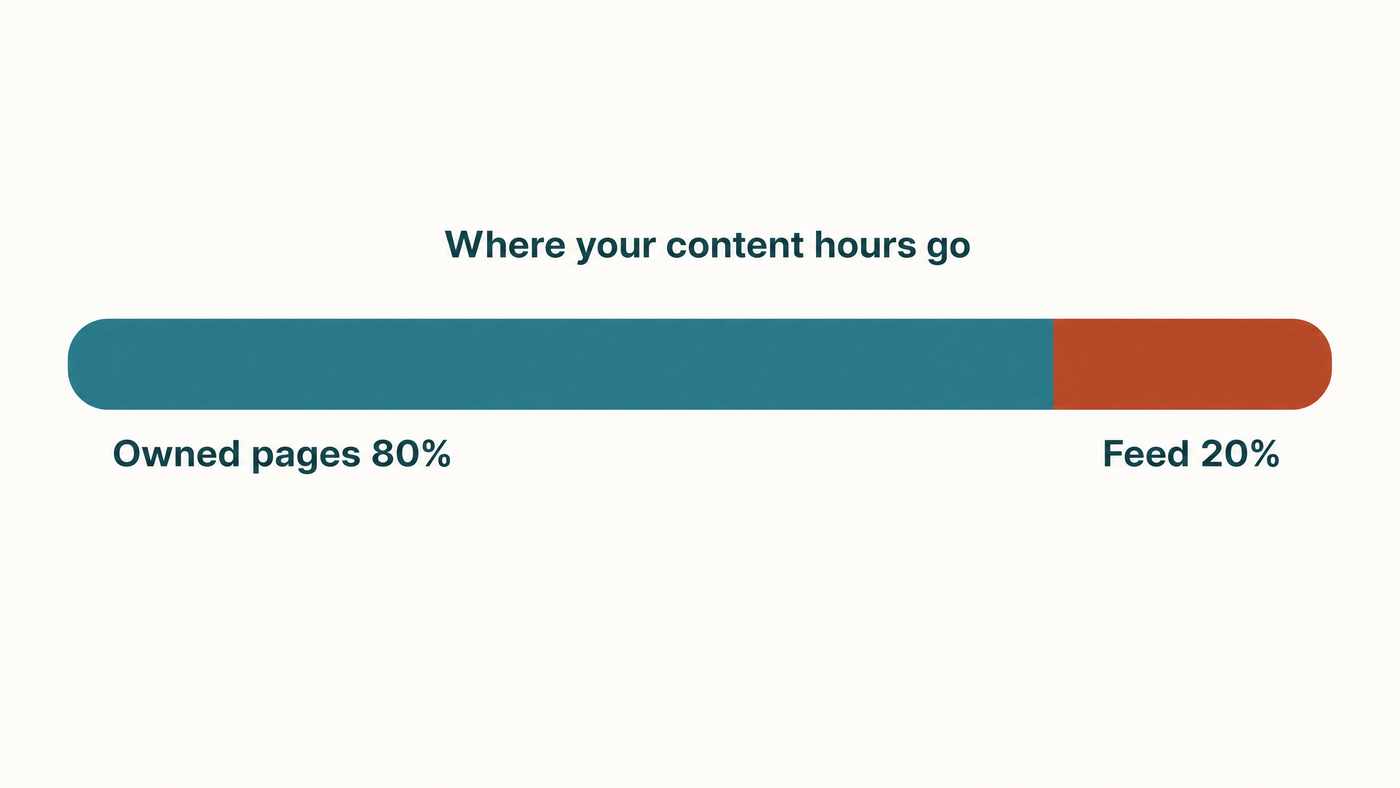
Settle blog vs social media as an allocation rather than a loyalty test. Give roughly 80% of your content hours to owned pages and 20% to the feed, and run this order:
- Pick eight to twelve buyer questions you already answer in sales calls.
- Test three of them as short social posts and note which one gets replies.
- Write the tested angle as a full page on your own domain.
- Post the summary to the feed with the link to the page.
- Repeat weekly, and check your asset count at day 90.
Start the quarter with an asset, not a post. Apex is Voholabs' content agent: it researches, writes in your brand voice, and publishes straight into your CMS, so the blog gets built while you keep posting. Setup is £799, then £239 a month managed. See how Apex works.
Why does AI search raise the cost of starting on social?
AI assistants cite pages, and feed posts are not pages. Generative engine optimisation, the practice of getting your brand named and linked inside AI answers rather than only ranked in search results, runs on crawlable, attributable URLs. When someone asks an AI assistant who to hire in your space, the answer is assembled from sources the model can name and link.
That route is growing quickly. After ChatGPT began surfacing clickable brand links inside answers on 7 May 2026, its referral share to websites rose 36.7% month on month worldwide and 38.7% in the UK. Every one of those clicks lands on a page, so a quarter that produced 90 feed posts and no pages gives the model nowhere to send anyone. Getting into that answer set is what GEO actually is, and it runs on the same answer-first pages that serve search, answer engines and AI assistants at once.
Where this leaves you
Blog vs social media comes down to half-life rather than to where the audience already sits. Fifty-two minutes against two years is not a close call when hours are the constraint, and the feed still works as the route once the pages exist. The move this week: write down the eight buyer questions you answer most often, and turn the first one into a page on your own domain.
If the writing is the bottleneck, that is the part Voholabs removes. Apex builds the library on your domain, in your voice, on a schedule, so the compounding starts in week one. Build the asset first.
References
- Lifespan (Half-Life) of Social Media Posts: Update for 2026, Scott M. Graffius (2026): X 52 minutes, Instagram 18.27 hours, LinkedIn 23.22 hours, YouTube 10.60 days, blogs 2.03 years.
- 27 Twitter (X) Stats to Know in Marketing in 2026, Sprout Social (2026): median brand engagement rate 0.015%; average impressions per post 2,864.78 in 2024 and 2,711.29 in 2025.
- The Secrets to Organic Reach in 2026, Sprout Social (2026): Instagram reach down 12% year on year to roughly 3 to 4% of followers.
- How Long Does It Take to Rank in Google? And How Old Are Top Ranking Pages?, Patrick Stox, Ahrefs (2025): 1.74% of new pages reach the top 10 within a year; 72.9% of top-10 pages are over three years old.
- Referral Traffic from ChatGPT Hit an All-Time High in May 2026, SE Ranking (2026): referral share up 36.7% month on month worldwide and 38.7% in the UK after the 7 May 2026 link change.
Frequently asked questions
- Should I start a blog or post on social media first?Start with the blog and use social to point at it. A blog post keeps earning for about two years while an X post is half finished in 52 minutes, so your first 90 days of effort buys far more when it lands on pages you own.
- How many blog posts can I realistically publish in 90 days?At one hour a day and roughly five hours a post, you can publish about 18 pages in a quarter. Each one stays live, stays linkable, and can be cited by search engines and AI assistants long after the quarter ends.
- Is blogging still worth it when new pages rarely rank quickly?Yes, with realistic timing. Ahrefs found only 1.74% of new pages reach Google's top 10 within a year, so expect months rather than weeks. The pages still work as sales collateral, proof for buyers, and citable sources for AI answers while they mature.
- Do I have to stop posting on LinkedIn and X?No. Keep posting, but treat the feed as the route rather than the destination. Test angles socially, then publish the version that got a reaction as a page on your own domain and link back to it.
Sources
- Lifespan (Half-Life) of Social Media Posts: Update for 2026, Scott M. Graffius (2026): X 52 minutes, Instagram 18.27 hours, LinkedIn 23.22 hours, YouTube 10.60 days, blogs 2.03 years
- 27 Twitter (X) Stats to Know in Marketing in 2026, Sprout Social (2026): median brand engagement rate 0.015%; average impressions per post 2,864.78 in 2024 and 2,711.29 in 2025
- The Secrets to Organic Reach in 2026, Sprout Social (2026): Instagram reach down 12% year on year to roughly 3 to 4% of followers
- How Long Does It Take to Rank in Google? And How Old Are Top Ranking Pages?, Patrick Stox, Ahrefs (2025): 1.74% of new pages reach the top 10 within a year; 72.9% of top-10 pages are over three years
- Referral Traffic from ChatGPT Hit an All-Time High in May 2026, SE Ranking (2026): referral share up 36.7% month on month worldwide and 38.7% in the UK after the 7 May 2026 link change