AI Content Skills: AI Fact Checking for Content (5 Fixes)
Part 5 of the AI content skills series: five things our AI made up in content, the note that caught each, and a Claude skill that refuses unsourced claims.


AI content skills for fact checking are not only about wrong dates. In our own drafts the AI invented a personal anecdote, a percentage split, a deliverable we do not sell, an assumption about the reader's tools, and a definition of our own idea. Each one was caught by a one-line review note, not a cleverer prompt.
Here are the five mistakes, what caught them, and the fix. At the end is a Claude skill, fact-guard, that lists every claim in a draft and its source before you read it. Run it before you publish, not after.
What this series is
This is part five of the AI content skills series: five real corrections per article, each article paired with a Claude skill you can install. A skill is a saved instruction Claude Code reads before it works, covered in full in 166 Ready-Made Skills That Turn Any AI Into a Specialist. This piece covers fact checking: the line between a claim you can stand behind and one the model made up to fill a gap.
The 5 mistakes
1. Invented anecdote
If it did not happen, it does not go in. A story needs the owner's confirmation before it goes anywhere near a draft, no matter how well it reads.
2. A number from nowhere
Every number carries its source line, or it does not go in the draft. A ratio that sounds plausible is still invented if nobody can point to where it came from.
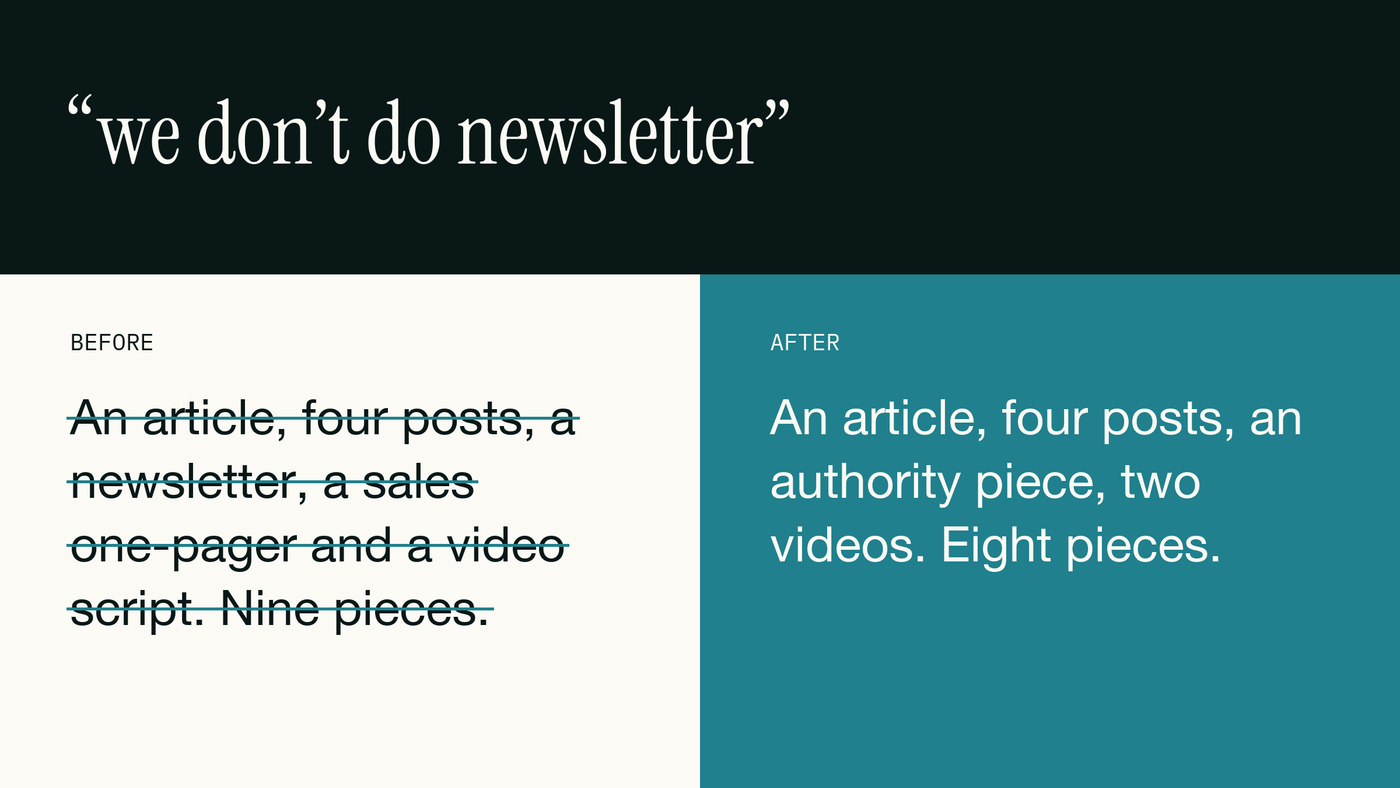
3. Deliverables we do not sell
Only list what the business actually produces. A tidy-sounding list is worse than a short accurate one.
4. Assuming the reader's tools
Do not assume what is already on the reader's desk. Say what the product does, not what you imagine they are running.
5. Defining the owner's idea from research
An original idea is not on the internet yet. Get it from the person who had it, one question at a time. Research is for facts that already belong to someone else. The idea itself is explained in non-linear content generation.
The Claude skill
fact-guard runs before anything ships: an article, a post, a page, an email, a script. It will not fix your writing. It will refuse to let an unsourced claim slide through.
mkdir -p ~/.claude/skills/fact-guard
# paste the SKILL.md below into ~/.claude/skills/fact-guard/SKILL.md
# then in Claude Code: /fact-guard  (or just ask it to draft; the description triggers it)
---
name: fact-guard
description: Use before returning any article, post, page, email or script that contains numbers, stories, product claims, deliverables or definitions. Flags every claim without a source and refuses invented detail. Triggers on draft, article, stats, numbers, case study, anecdote, definition, what we offer.
---
# fact-guard
Before returning a draft, list every claim and mark its source. Anything unsourced is removed or replaced with a placeholder. Never invent to fill a gap.
## Rules
1. No invented stories. Anecdotes, diaries, "day 3" moments and customer quotes need a witness: the owner's confirmation or a linked source. Otherwise cut them.
2. Every number has a source line. Write the origin next to it in the draft ("(source: X, 2026)") or use "[number: source needed]" until final. No ratios, splits or percentages from pattern.
3. Only real deliverables. State what the business actually produces (ask or read the offer page). Do not add items because the list feels incomplete.
4. Do not assume the reader's tools, budget or setup. "The agent you already use" becomes "one agent".
5. Original ideas come from an interview. If the owner calls something their own idea, ask one question at a time, write their definition in their words, and use research only for borrowed authority (public figures, public studies).
## Self-check
- Claims table: every number, name, quote, story and deliverable, with a source or "owner confirmed".
- Any row without a source: removed or placeholdered, never softened with "around" or "roughly".
- Any sentence that presumes the reader's situation: rewritten neutral.
- Any definition of the owner's own concept: quoted from the owner, not paraphrased from the web.
- Return the claims table with the draft.
Run it on the last thing you published.
Where this leaves you
None of this needs a smarter model. It needs a rule that survives past the first draft. Every number gets a source, every story gets a witness, and your own ideas come from you, not a search result. Try it yourself: Voholabs Studio is free to schedule what you actually ship.
Frequently asked questions
- How do AI content skills catch fact checking mistakes?List every number, name and claim in the draft. Attach a source or the owner's confirmation to each one. Anything without either is removed, not softened with a hedge word.
- Why does AI make up anecdotes?It is completing the pattern of a story, not reporting one. The fix is a rule that every anecdote needs a witness, not a cleverer prompt.
- Can AI define my own idea?No. It will pull the nearest idea it already knows and hand that back as yours. Interview the owner and use their words instead.
Sources
- Agent Skills overview· Anthropic
- Creating helpful, reliable, people-first content· Google Search Central
- What are AI hallucinations?· IBM