Why GEO Matters Now More Than Ever (And the 1 Move That Gets You Cited)
Generative engine optimisation (GEO) decides which brands AI assistants cite, and with 68% of searches now ending without a click, here is why GEO matters now.


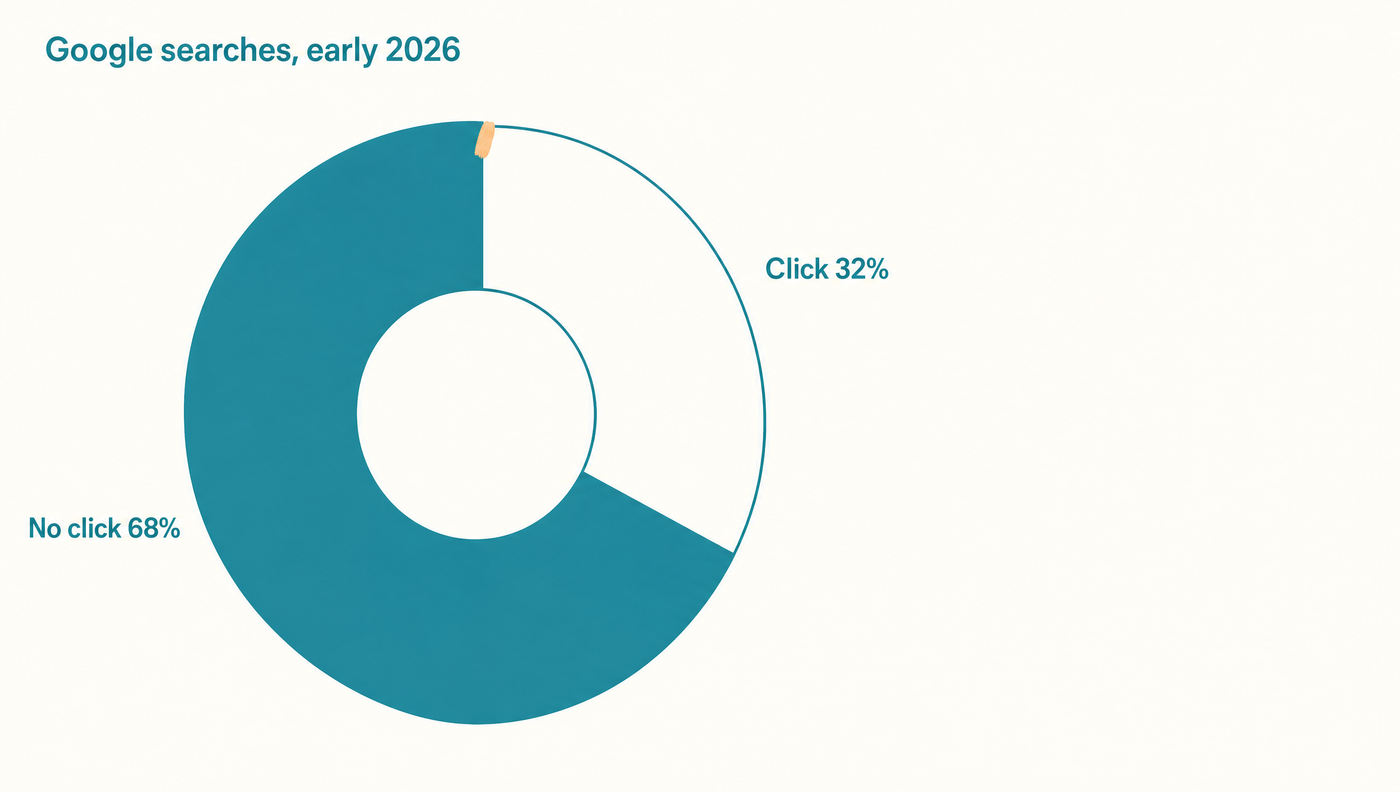
Sixty-eight percent of Google searches in the first four months of 2026 ended without anyone clicking a result. The answer appeared on the page or inside an AI assistant, and the visit never happened. If you publish anything to be found, that one number is the whole story: the click you used to compete for is vanishing, and a different contest has taken its place. Generative engine optimisation (GEO) is the practice of structuring your content so AI assistants cite and recommend you when they answer a question in your field. You can read the fuller definition of GEO if you need it. This piece is about something more urgent: why GEO matters now more than ever, and the one move that gets you into those answers this quarter.
What changed, and why is GEO no longer optional?
GEO stopped being optional the moment AI assistants began answering questions instead of linking to answers. For twenty years the deal was simple: you earned a place in a list of links, and a share of searchers clicked through. That deal is closing. AI Overviews now appear on more than a fifth of Google searches, and when they do, click-through rates fall by close to 60%. Gartner expects traditional search volume to drop 25% as people ask an assistant instead of scanning a results page. The page of ten blue links is giving way to a single synthesised answer, and the only question that matters is whether your brand is named inside it. That is the contest GEO is built for.
Why does GEO matter now more than ever?
GEO matters now because the brands AI assistants cite are being chosen this year, not at some comfortable point in the future. ChatGPT reached 900 million weekly active users in February 2026, up from 400 million a year earlier. Hundreds of millions of people now ask a model the questions they used to type into a search bar, and the model is forming its default answer for each of those questions as you read this. Whoever it learns to cite first becomes the source it reaches for again and again. This is not only a visibility story, it is a quality-of-traffic story: AI referrals arrive with higher intent and convert better than ordinary organic visits, because the person has already had their options narrowed before they reach you. If you have been deciding where to publish AI content, the timing question is settled.
In practice, this means: the model is writing the shortlist for your category now, and it updates slowly. Being cited this quarter is worth more than being cited next year.
What does waiting actually cost you?
Every month you wait, a competitor becomes the answer the model reaches for by default. Most readers are at the AI-enabled stage: you use AI tools, you may still run some search engine optimisation, but nothing you publish is built to be cited by a machine. The next stage is AI-first, where you intentionally shape content so an assistant can lift it cleanly into its answer. The gap between those two stages is where your market position is being decided right now. The brand that reaches AI-first this quarter earns citations that compound for months, the same way a good prompt keeps paying off once you save it instead of being retyped. The brand that waits is not standing still, it is sliding behind a competitor who is already being recommended. Late entry costs more here than in classic search, because models anchor on the sources they have already learnt to trust.
How do you show up in AI answers this quarter?
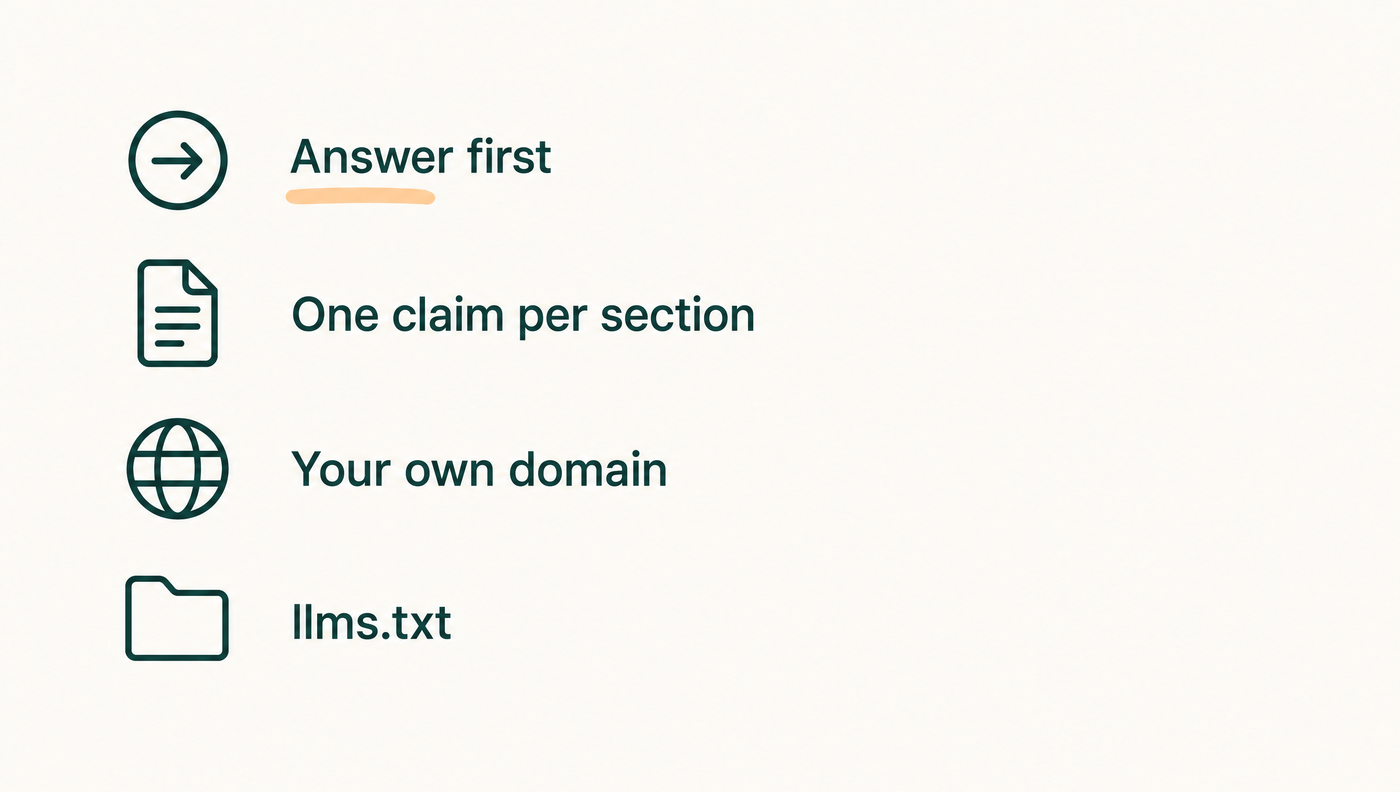
You show up in AI answers by publishing clear, answer-shaped content on a domain you own. Answer-shaped means leading with the answer, making one clean claim per section, and defining terms plainly so a model can quote you without guessing. Own the land: publish on your own site, not a rented platform, so the citation points back to you. Tell the assistants how to read you with a well-built llms.txt file. Write each piece to one specific buyer instead of everyone, which starts with defining your ICP, and consider owning one market before you scale. The noise around GEO is loud, with dozens of checklists each listing fifty tactics. Ignore most of it. The signal is small, and it is the work above.
Author's tip: Pick the five questions a buyer asks right before they choose someone in your category. Publish one clear, answer-shaped page for each. That is a quarter of GEO work that actually moves citations.
Want the noise filtered for you? We find the GEO moves that actually matter for your category and build the answer-shaped content that gets you cited, customised to your buyers. See how the AI content agent works.
Where this leaves you
The click is leaving, the citation is arriving, and the brands being named are being chosen now. GEO matters more than ever because the cost of waiting is no longer lost traffic, it is a competitor becoming the default answer in your category. Your next move is one page: take the single question your best buyer asks, and publish the clearest answer on the internet on your own site, this week. If you would rather have the relevant moves filtered and the content built for you, that is the work we do. Start before the window closes.
References
In 2026, Less than One Third of Google Searches Still Send a Click, SparkToro (2026)
Google Zero-Click Searches Reach 68% in Early 2026, Search Engine Land (2026)
Gartner Predicts 25% Search Volume Drop by 2026, Emarketed (2024)
AI Search Statistics 2026: GEO, Buyer Behaviour and Citation Rates, Omnibound (2026)
Frequently asked questions
- What is generative engine optimisation (GEO)?Generative engine optimisation is the practice of structuring your content so AI assistants cite and recommend you when they answer a question in your field. Instead of competing for a place in a list of links, you are competing to be named inside the single synthesised answer the assistant gives.
- Why does GEO matter now more than ever?Because the sources AI assistants cite are being chosen this year. In the first four months of 2026, 68% of Google searches ended without a click, and ChatGPT reached 900 million weekly active users in February 2026. Models are forming their default answer for each question now, and whichever source they learn to cite first becomes the one they reach for again.
- What does waiting on GEO actually cost you?Every month you wait, a competitor becomes the answer the model reaches for by default in your category. Late entry costs more here than in classic search, because models anchor on the sources they have already learnt to trust.
- What is the one move that gets you cited by AI assistants?Publish clear, answer-shaped content on a domain you own. Lead with the answer, make one clean claim per section, define your terms plainly, and write to one specific buyer rather than everyone. A well-built llms.txt file then tells the assistants how to read you.
Sources